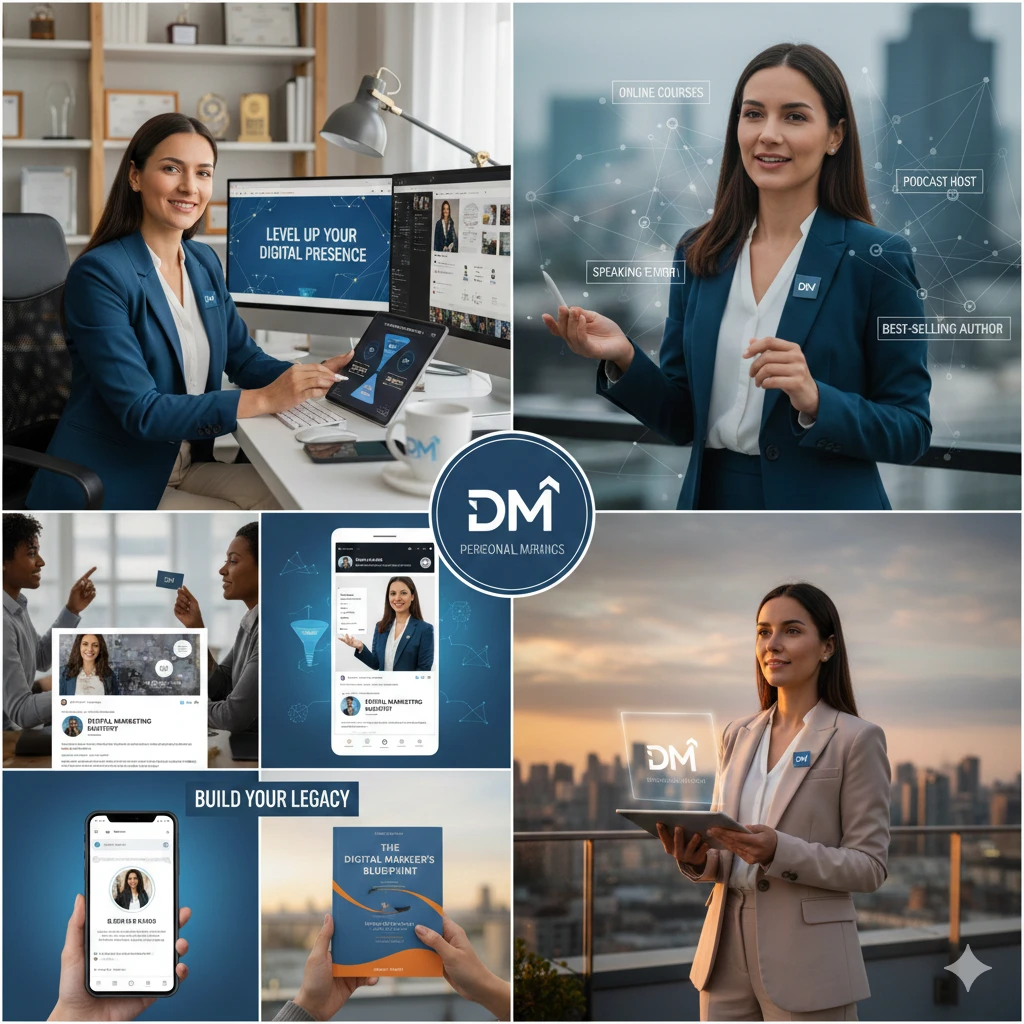
How to Build a Strong Personal Brand as a Digital Marketer
In today’s competitive digital world, skills alone are not enough. Thousands of digital marketers offer SEO, social media marketing, paid ads, and content services—but only a few stand out. The key difference is personal branding.
A strong personal brand helps you build trust, attract high-quality clients, charge premium prices, and create long-term career growth. Whether you are a freelancer, agency owner, or aspiring digital marketer, personal branding is no longer optional—it’s essential.
This guide explains how to build a strong personal brand as a digital marketer, step by step, in 2026 and beyond.
What Is Personal Branding in Digital Marketing?
Personal branding is the process of positioning yourself as an expert and trusted authority in your niche. It is how people perceive you online—your skills, values, personality, and credibility.
Your personal brand includes:
Your online presence
Your content
Your expertise
Your communication style
Your reputation
In simple terms:
Your personal brand is what people say about you when you’re not in the room.

Why Personal Branding Matters for Digital Marketers
1. Builds Trust Faster
People trust individuals more than companies. A strong personal brand makes clients feel confident before they contact you.
2. Attracts Quality Clients
Instead of chasing clients, the right clients come to you because they already believe in your expertise.
3. Increases Income Potential
Strong personal brands can charge premium rates because they offer authority, not just services.
4. Creates Long-Term Career Security
Platforms change, but a personal brand stays with you forever.
Step 1: Define Your Niche and Positioning
You cannot be everything to everyone. Successful personal brands are focused.
Ask Yourself:
What services do I specialize in?
Who is my ideal audience?
What problem do I solve better than others?
Example Niches:
SEO for local businesses
Social media marketing for small brands
Performance marketing for e-commerce
AI-powered digital marketing
Video marketing and editing
Clear positioning = strong brand recognition.
Step 2: Identify Your Unique Value Proposition (UVP)
Your UVP is what makes you different from other digital marketers.
Your UVP Could Be:
Your experience
Your results
Your communication style
Your process
Your personal story
Example UVP:
“I help local businesses rank on Google and generate leads using SEO and AI-driven strategies.”
Make your value clear in one simple sentence.
Step 3: Build a Professional Online Presence
Your online presence is your digital identity.
1. Personal Website
Your website is your brand headquarters.
Must-have pages:
Home
About Me
Services
Portfolio / Case Studies
Blog
Contact
SEO Tip: Optimize your website for your name and main service.
2. Social Media Profiles
Choose platforms where your audience is active:
LinkedIn (professionals & B2B)
Instagram (personal + visual branding)
X (Twitter) (thought leadership)
YouTube (video authority)
Keep consistency:
Same profile photo
Same bio
Same brand message
Step 4: Create High-Value Content Consistently
Content is the backbone of personal branding.
Types of Content to Create:
Educational posts
How-to guides
Case studies
Industry insights
Personal experiences
Success stories
Mistakes and lessons
Best Content Formats:
Blog articles
Short-form videos (Reels, Shorts)
LinkedIn posts
Carousels
Email newsletters
Rule: Teach more than you sell.
Step 5: Show Proof and Results
People believe results, not claims.
Ways to Show Proof:
Case studies
Before-and-after data
Client testimonials
Screenshots of results
Google reviews
If you’re a beginner:
Share learning projects
Document your journey
Show experiments and outcomes
Authenticity builds trust faster than perfection.
Step 6: Build Authority with Thought Leadership
Authority is built by sharing opinions backed by experience.
How to Build Authority:
Share insights on trends
Break down complex topics
Analyze algorithm updates
Share your perspective on AI and marketing
Publish long-form content
Don’t just repeat what others say—add your own angle.
Step 7: Leverage SEO for Personal Branding
SEO helps people discover you when they search.
Personal Branding SEO Tips:
Rank for your name
Optimize for service + location keywords
Publish evergreen blog content
Use schema and structured data
Build backlinks
Example keywords:
“Best digital marketer in [city]”
“SEO expert near me”
“Freelance digital marketer”
SEO works silently but powerfully.
Step 8: Build Trust Through Engagement
Personal branding is not broadcasting—it’s building relationships.
Engagement Strategies:
Reply to comments and messages
Answer questions publicly
Join discussions in your niche
Collaborate with other creators
Offer free value
People remember marketers who listen and help.
Step 9: Use Video to Humanize Your Brand
Video builds emotional connection faster than text.
Video Ideas:
Tips and tutorials
Behind-the-scenes content
Client success stories
Q&A sessions
Industry updates
You don’t need perfection—clarity and honesty matter more.
Step 10: Be Consistent and Authentic
Personal branding is a long-term game.
Key Consistency Areas:
Posting schedule
Brand message
Tone of voice
Visual identity
Authenticity Tips:
Be honest about your journey
Share failures and lessons
Avoid copying others
Stay true to your values
People connect with real humans, not perfect profiles.
Common Personal Branding Mistakes to Avoid
❌ Trying to target everyone
❌ Inconsistent posting
❌ Over-selling services
❌ Copying competitors
❌ Ignoring engagement
❌ No clear niche
Avoid these, and your brand will grow faster.
Tools to Build a Strong Personal Brand
Canva – Design
ChatGPT – Content ideas & drafts
Notion – Content planning
Grammarly – Writing clarity
Google Analytics – Performance tracking
Semrush / Ahrefs – SEO
Buffer / Hootsuite – Social scheduling
Tools support branding—but you are the brand.
How Long Does Personal Branding Take?
Personal branding is not instant. Typically:
3 months: Visibility starts
6 months: Authority builds
12 months: Strong recognition & leads
Consistency beats intensity.
Final Thoughts
Building a strong personal brand as a digital marketer is one of the smartest investments you can make in your career. It gives you visibility, credibility, trust, and long-term success.
In 2026, people don’t just hire skills—they hire brands they trust.
Start today:
Define your niche
Share your knowledge
Show your results
Stay consistent
Be authentic
Your personal brand will work for you—even when you’re offline.